On the morning of September 18, the Lancang-Mekong Together: China-ASEAN Youth Academic Exchange Camp was held at Yulin Hall, Jun Wu Building, Guangxi University. The event brought together experts, scholars, and young students from China, Vietnam, Laos, Cambodia, and other countries for in-depth exchanges on topics including China-ASEAN economic and trade cooperation, regional industrial chain development, the digital economy, green transformation, and financial cooperation. The event was moderated by Liu Mengjuan, Deputy Secretary of the CPC Committee of the School of Economics, Guangxi University.
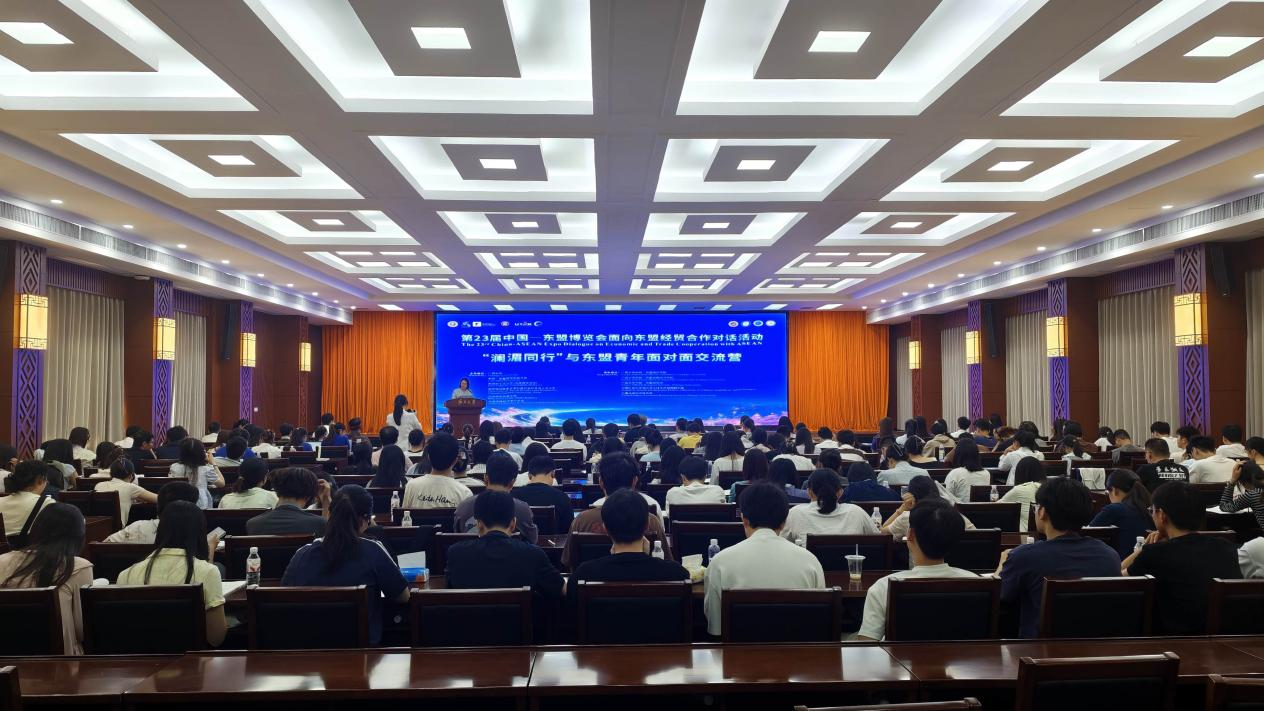
Conference Venue
Lei Yuanmei, Secretary of the Communist Youth League Committee of Guangxi University, welcomed the Chinese and international guests and young students attending the event. She encouraged young participants to make the most of the opportunity for exchange, broaden their international horizons and deepen mutual understanding through open and inclusive academic dialogue, and inject fresh vitality into exchanges and cooperation between China and ASEAN countries through the strength of youth. Song Yaoming, an expert in international economic and trade affairs and currently Vice President and Secretary-General of the China Association for International Economic Cooperation, drew on his extensive experience in international economic and trade affairs to share his reflections on international economic and trade cooperation and youth development. He encouraged the younger generation to pay close attention to practical issues in regional development, strengthen their professional capabilities through exchanges and mutual learning, and broaden their perspectives on the world through engagement in China-ASEAN cooperation.
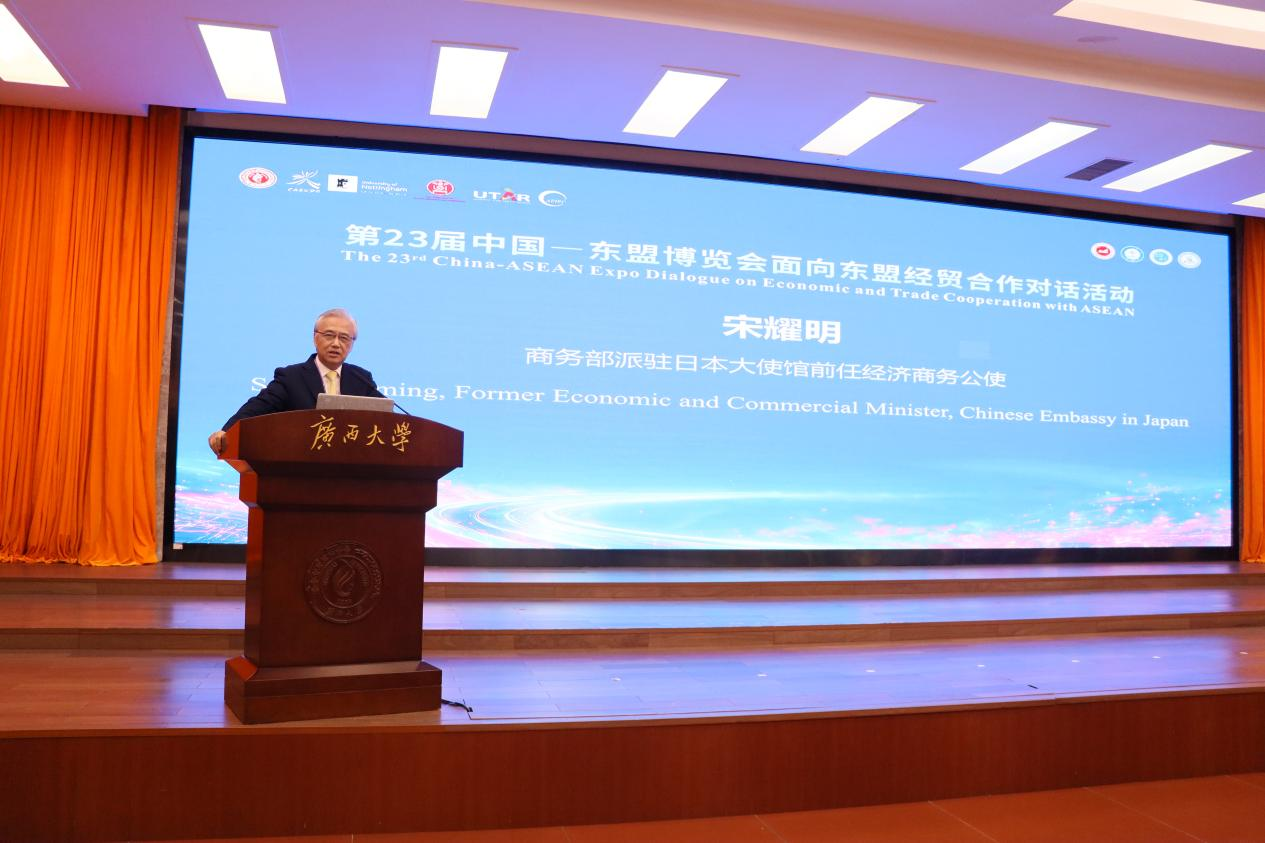
Song Yaoming delivering remarks
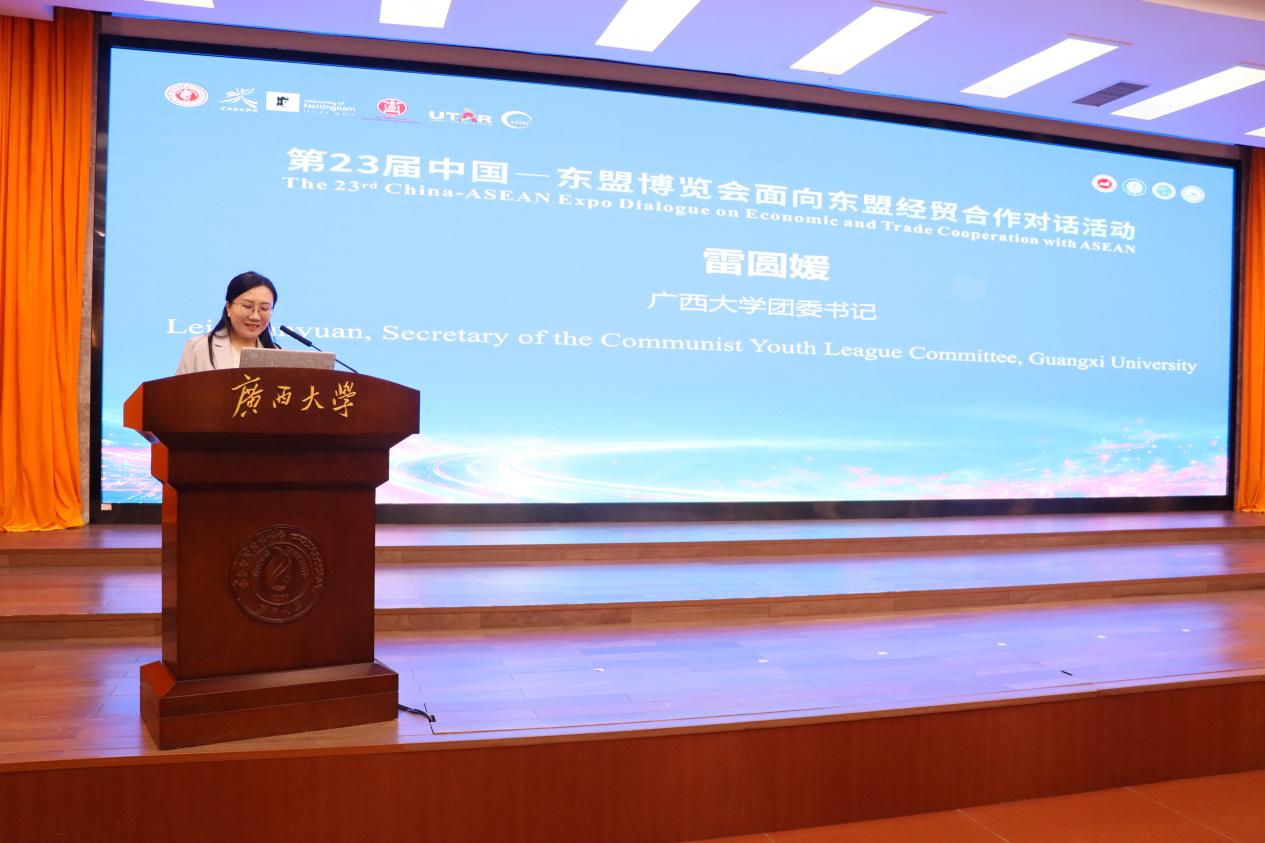
Lei Yuanyuan delivering remarks
During the keynote remarks session, Um Vuty, Assistant to Hun Sen, President of the Senate of Cambodia, and Founder and Chairman of the Association of Cambodian Students in China (ACSC), and Mrs. Pham Thi Quynh Huong from Vietnam delivered remarks in turn. Drawing on their own experiences and observations, the speakers shared perspectives on youth exchanges between China and ASEAN countries, regional economic and trade cooperation, and future development. Their insights and reflections from different national and cultural backgrounds offered participants a broader perspective for gaining a deeper understanding of ASEAN and regional cooperation, while also setting the stage for the youth academic exchanges that followed.
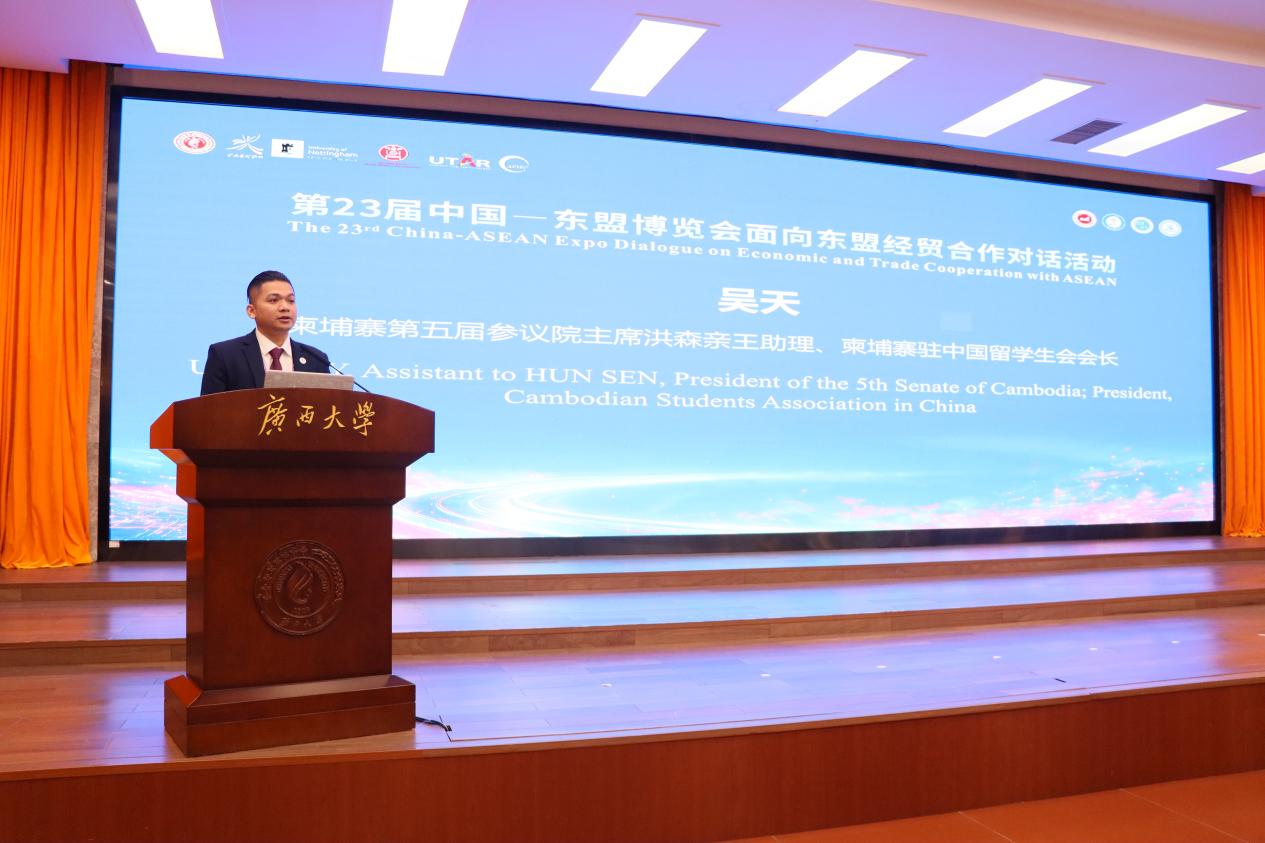
Um Vuty delivering keynote remarks
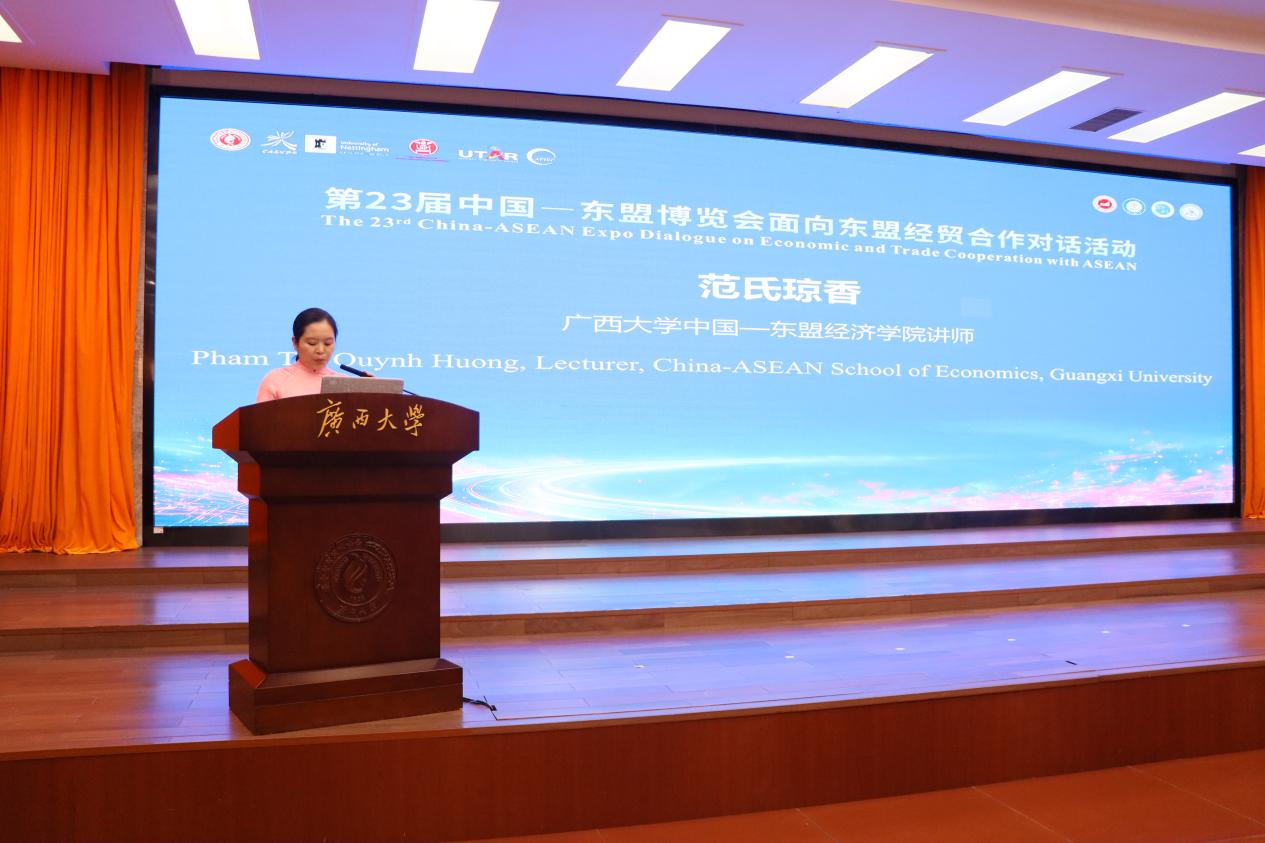
Pham Thi Quynh Huong delivering keynote remarks
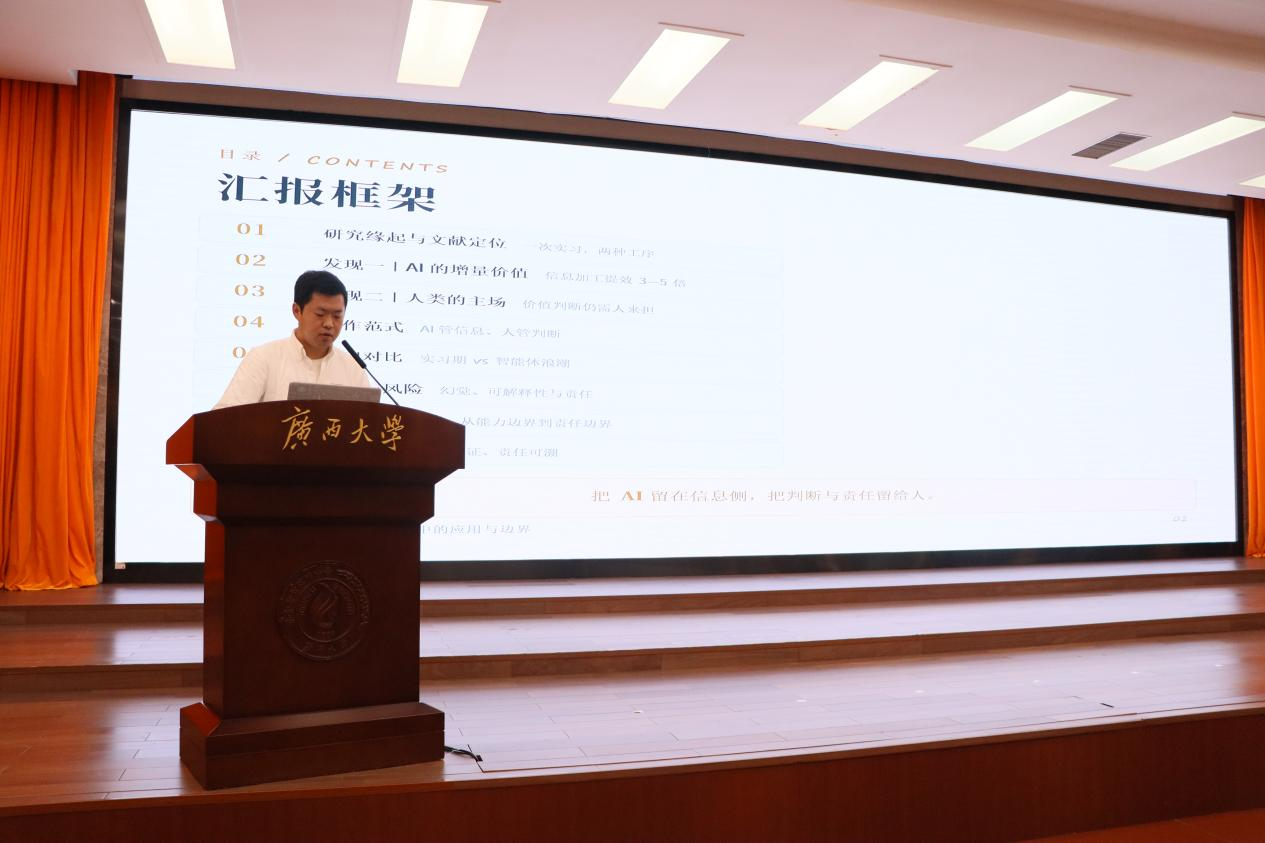
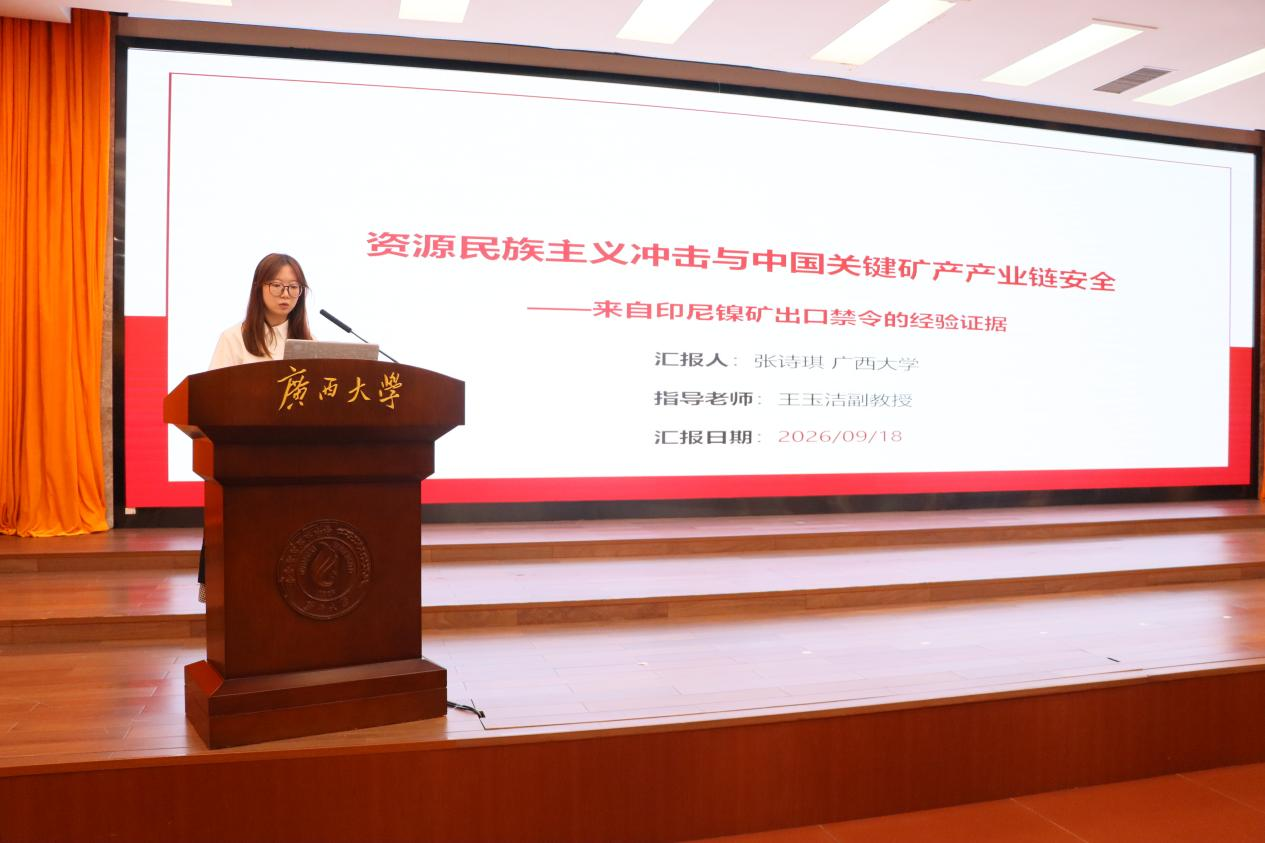
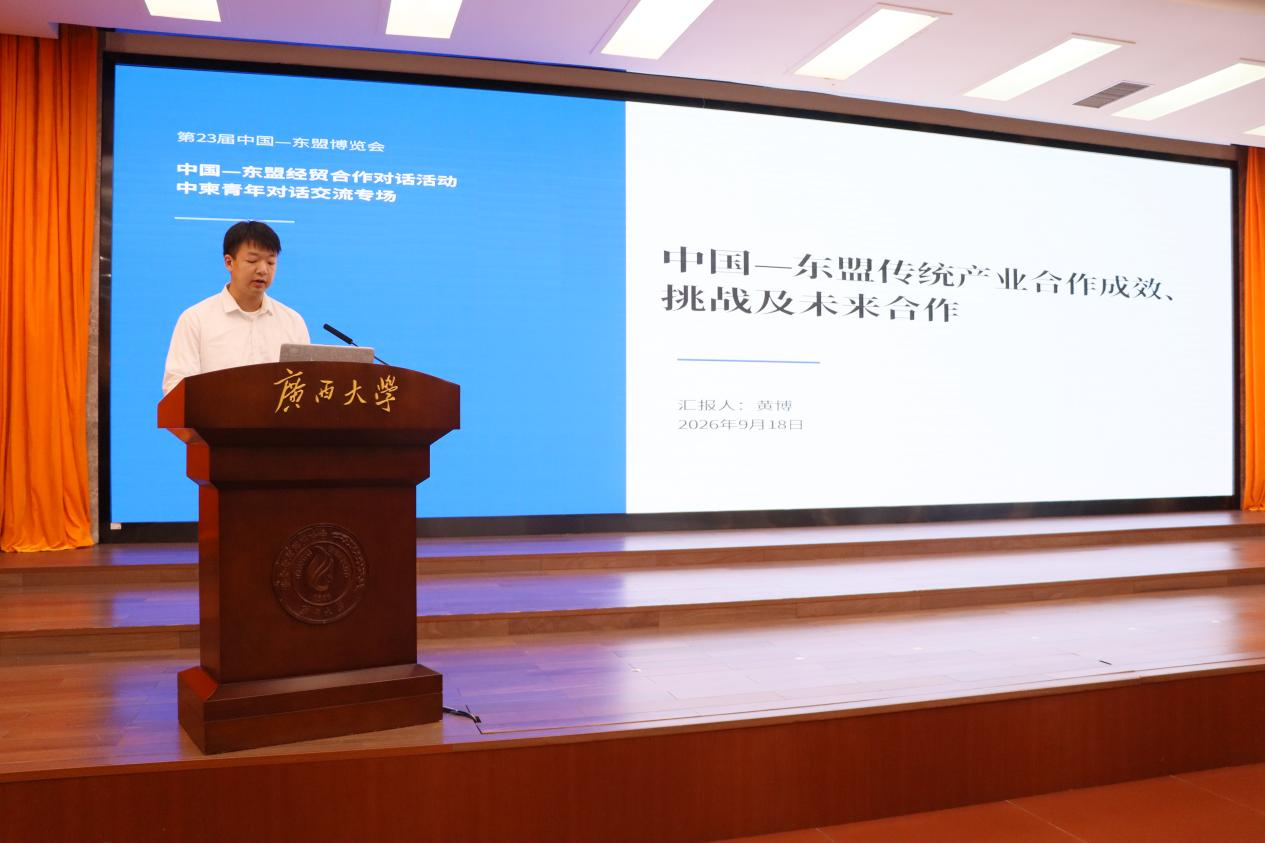
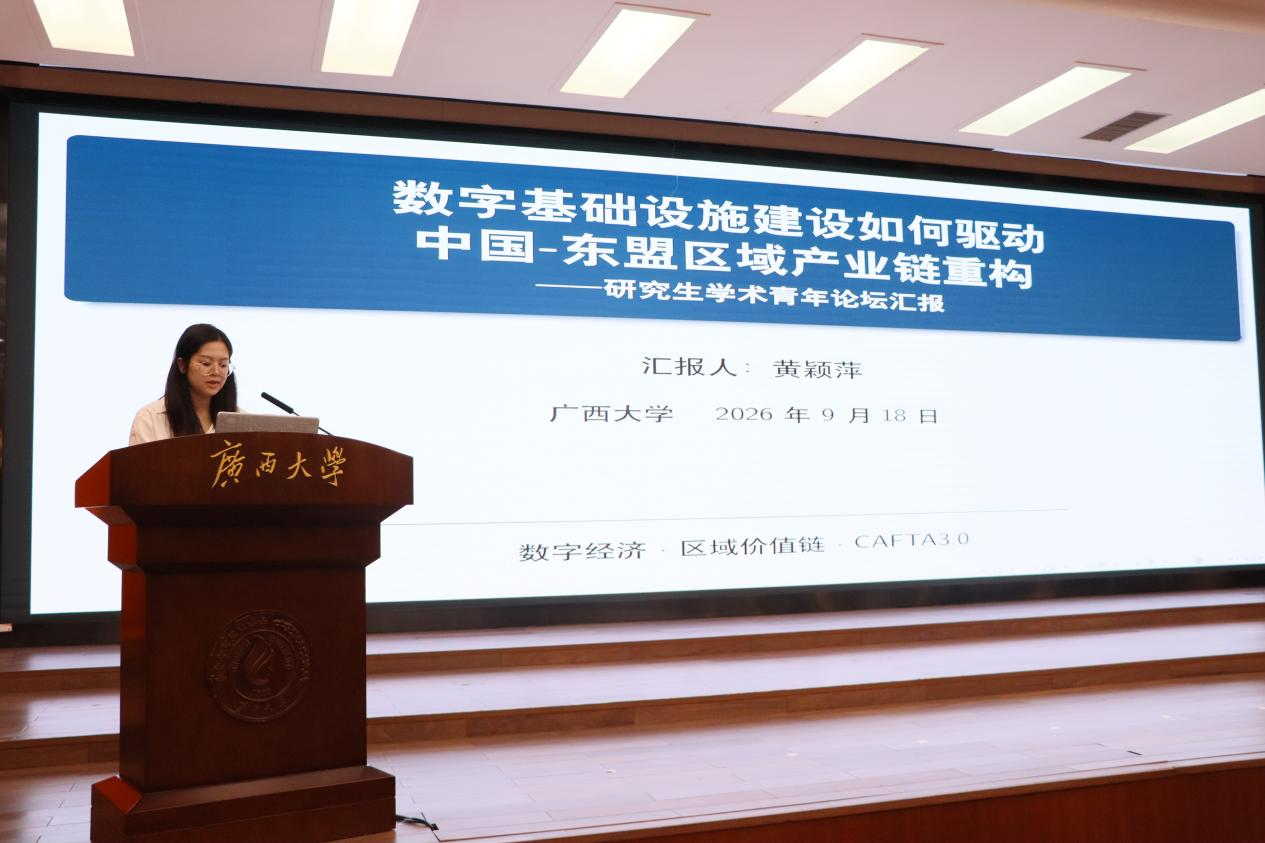
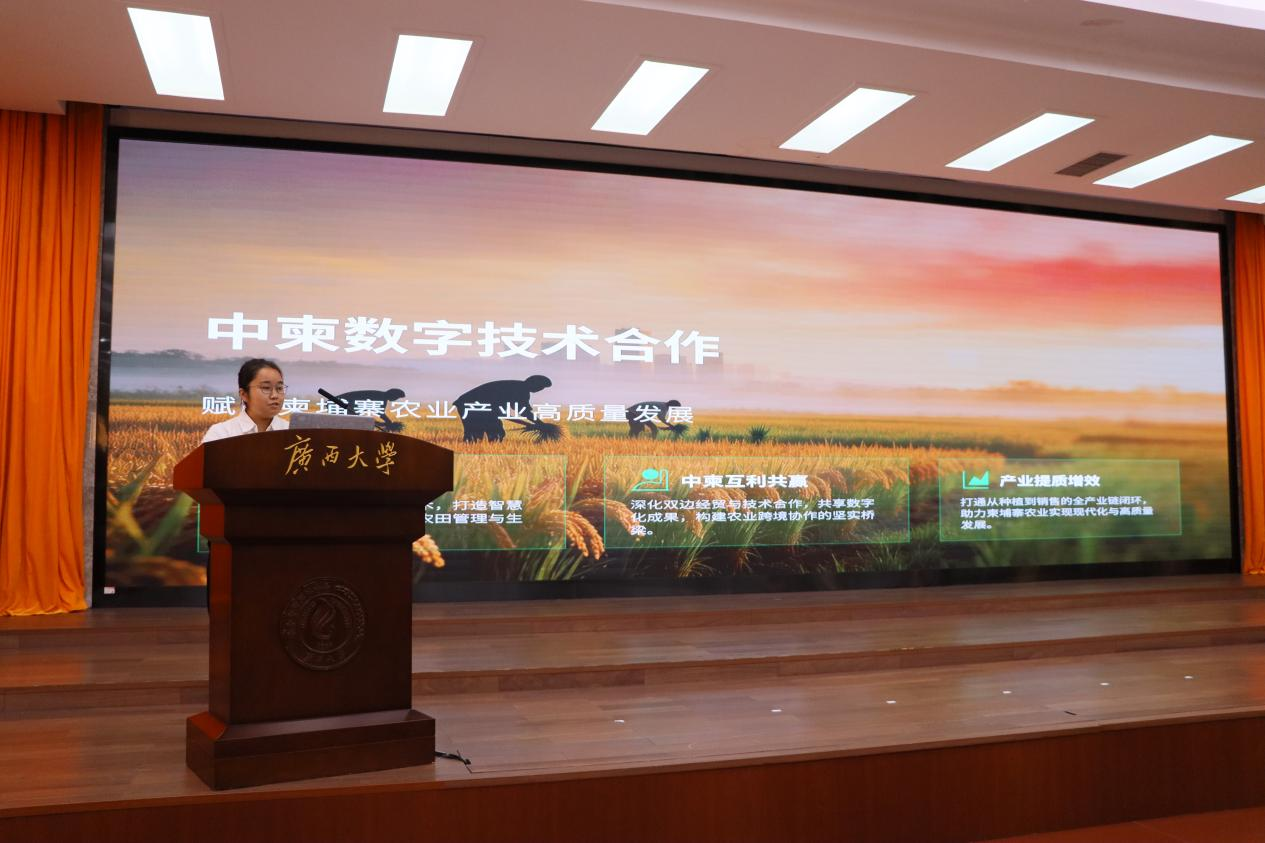
The Chinese and International Youth Exchange Session was moderated by Associate Professor Mo Guoli of the School of Economics, Guangxi University. Doctoral and master’s students from China, Vietnam, Laos, and other countries presented their research findings in turn. Drawing on the realities of China-ASEAN regional cooperation, the young scholars exchanged views across a wide range of fields, including international trade, financial cooperation, industrial and supply chains, the digital economy, green development, and infrastructure development, reflecting both diverse research topics and perspectives. Hu Yanwen, Wu Quanlian, You Suowei, and Wang Xingzuo presented analyses on China-ASEAN economic and trade cooperation and insurance development; the differentiation of the U.S. dollar’s international status and the internationalization of the renminbi; digital and green provisions in China-ASEAN Free Trade Area 3.0; and the application and boundaries of large language models in primary-market investment research, respectively. Zhang Shiqi, Huang Bo, Huang Yingping, and Zou Qingqing focused respectively on the impact of resource nationalism on the security of China’s critical mineral industrial chains; the achievements and challenges of traditional industrial cooperation between China and ASEAN; digital infrastructure development and the restructuring of regional industrial chains; and new opportunities arising from digital technology cooperation for the development of the agricultural industries of China and Cambodia.
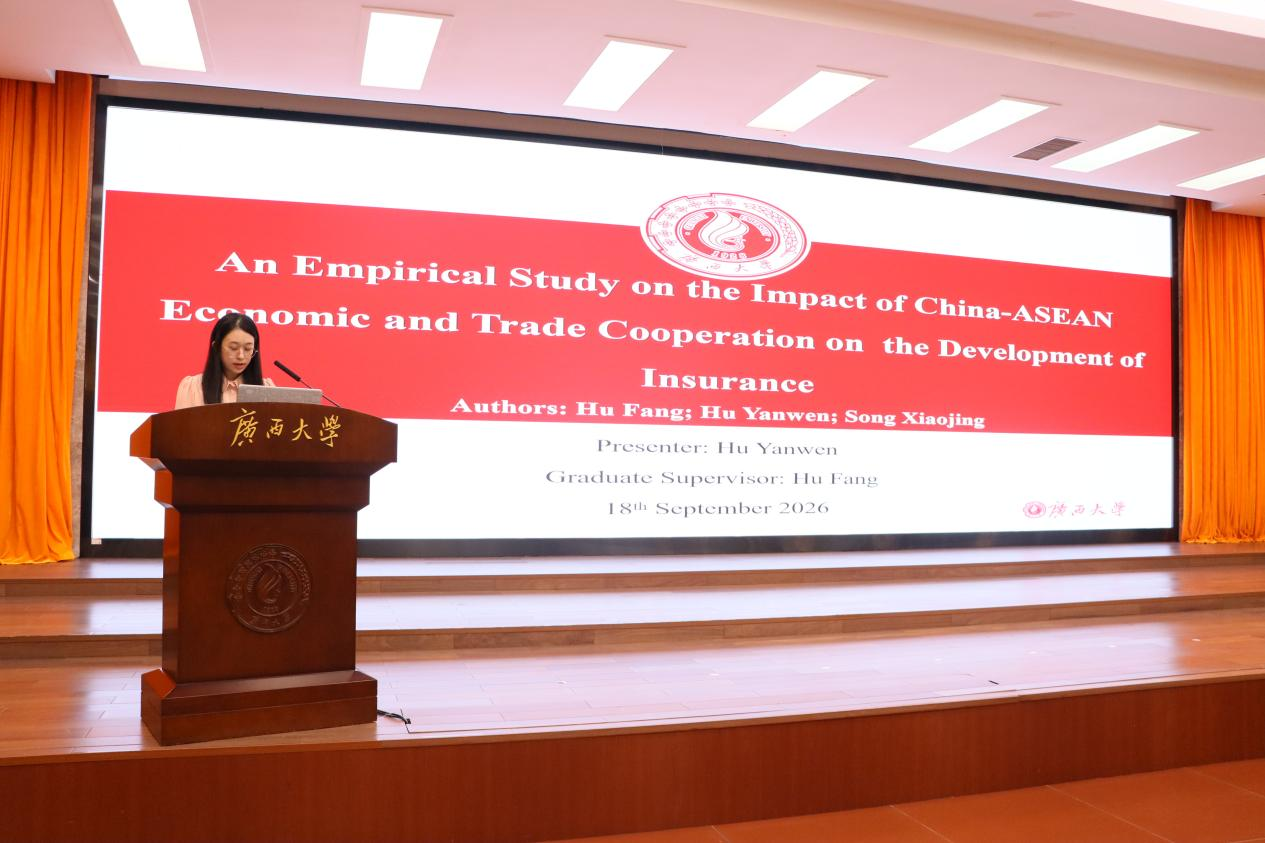
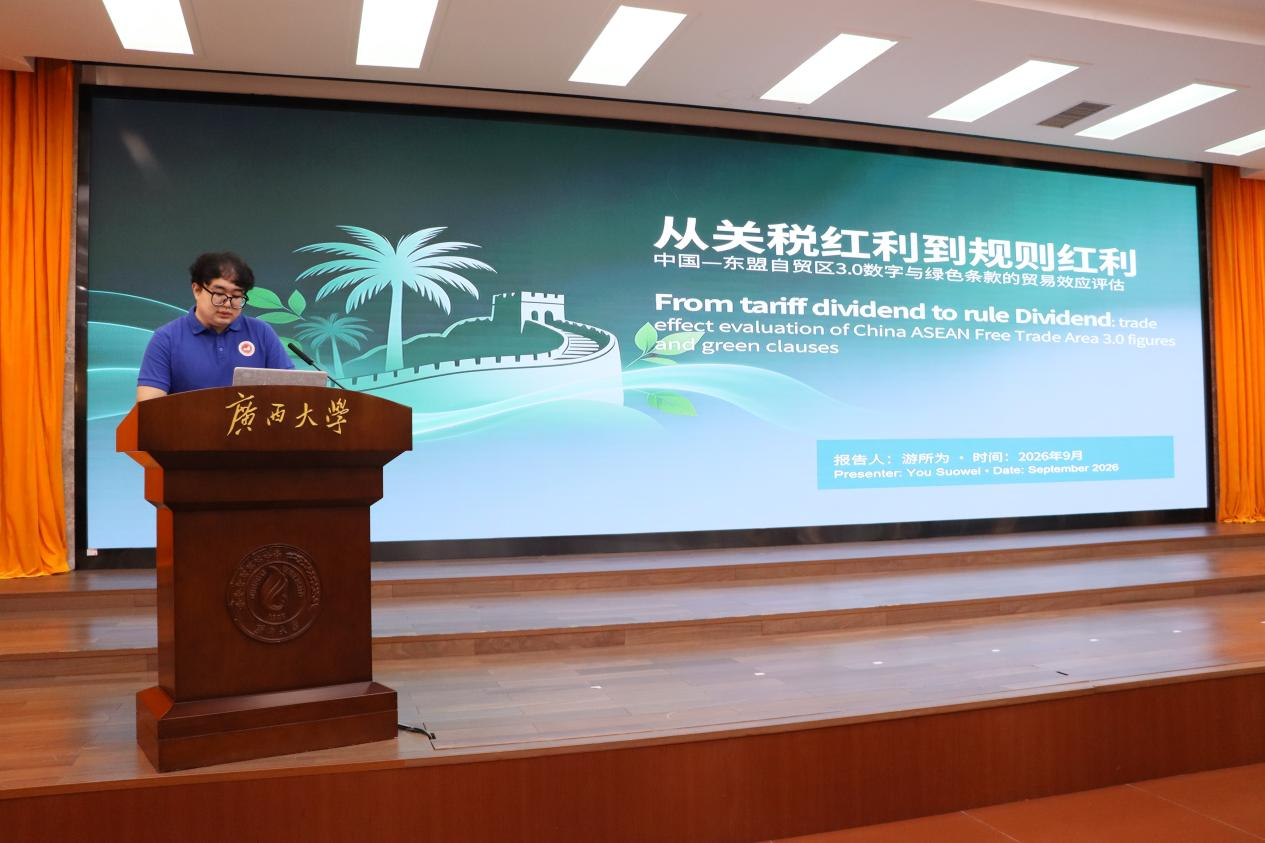
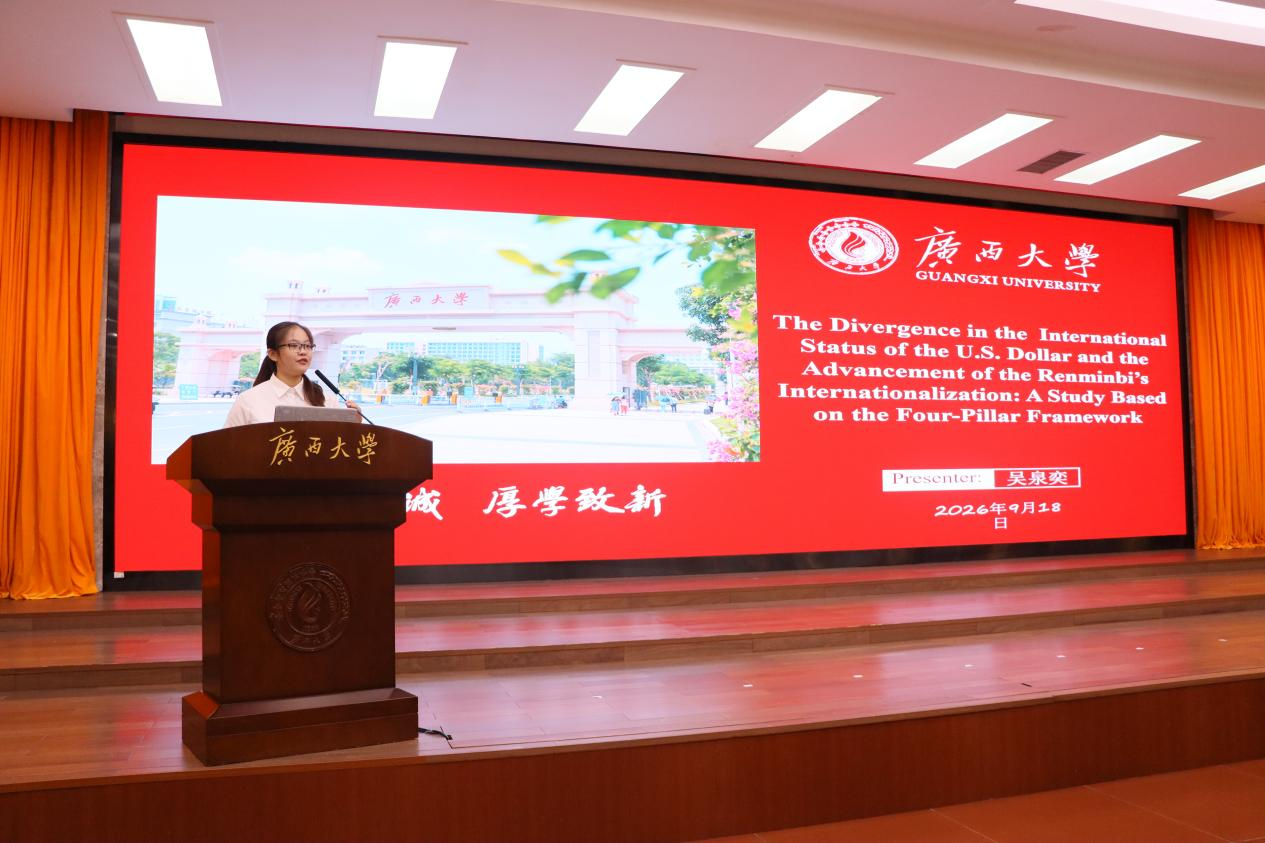
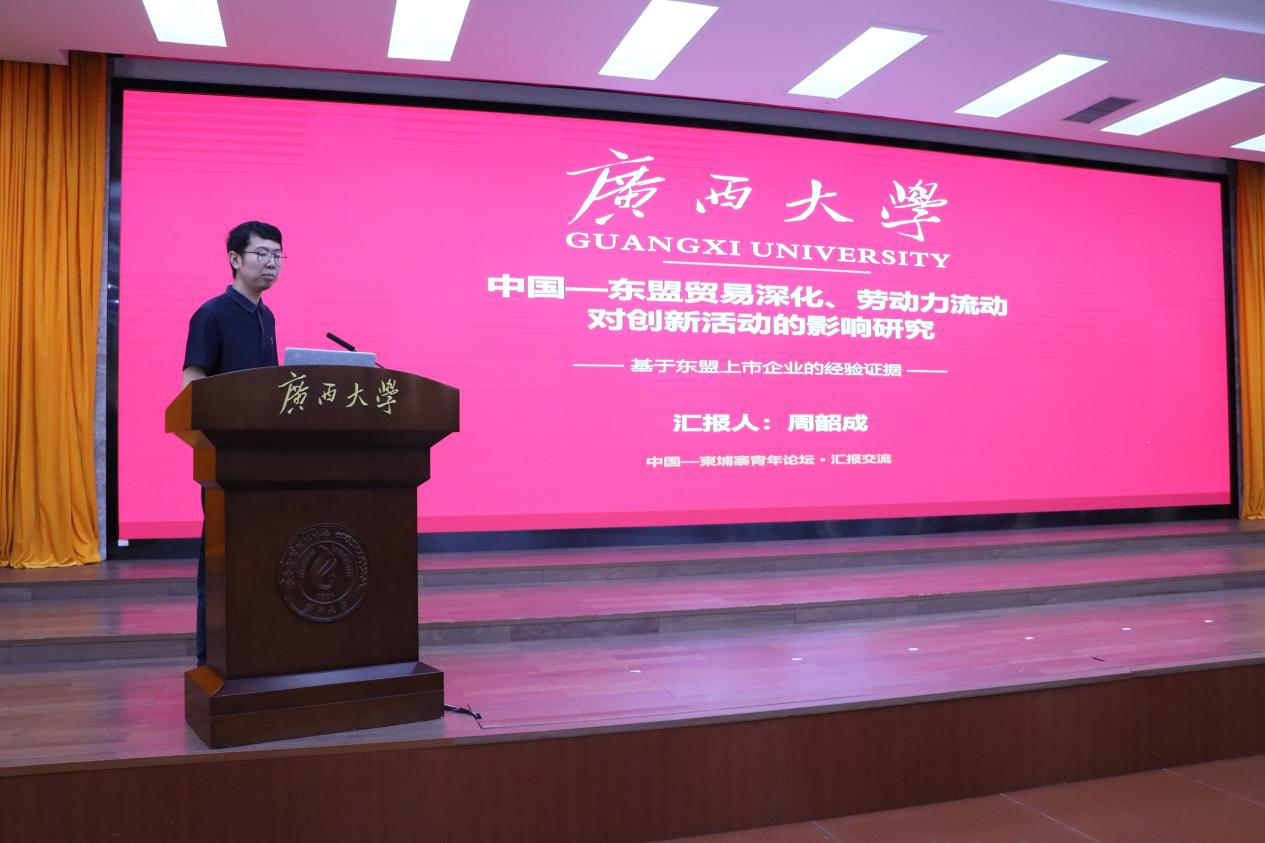
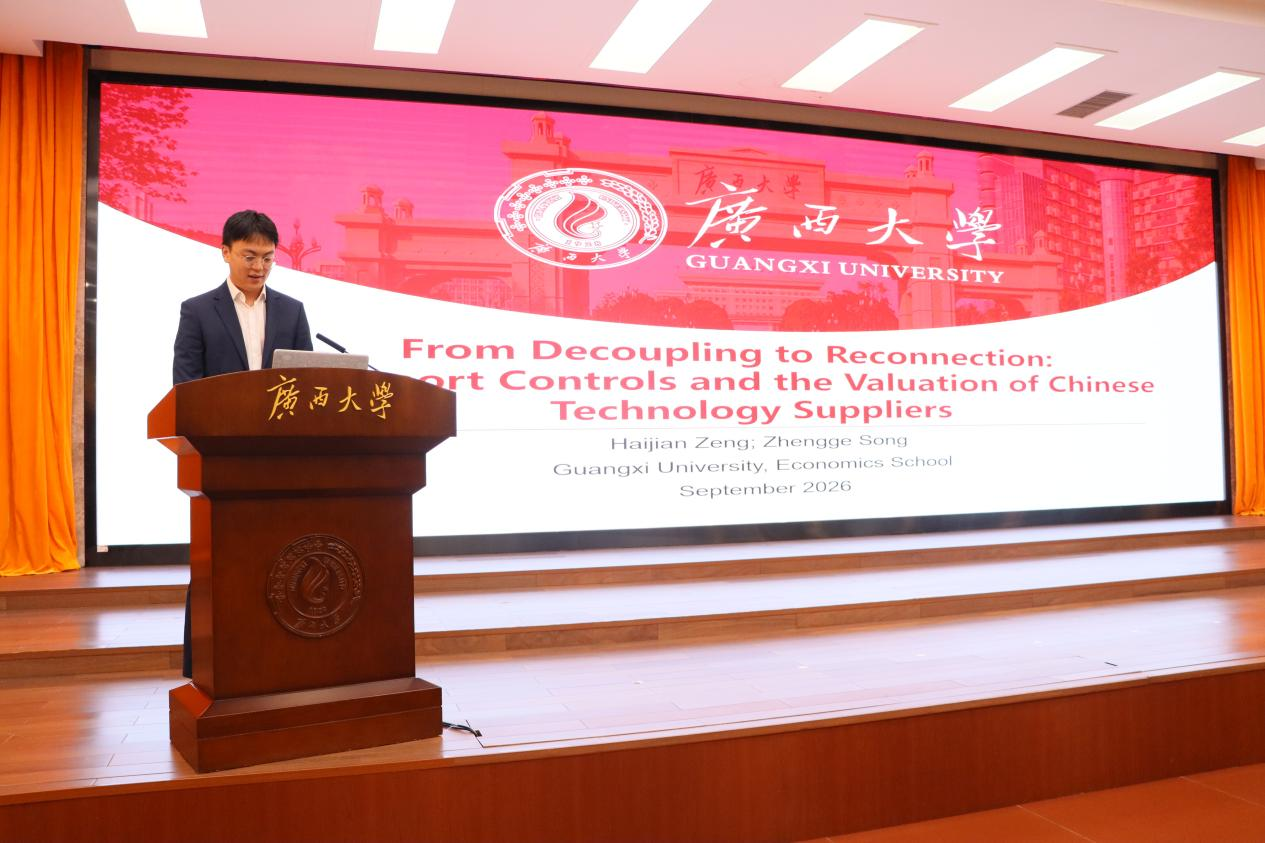
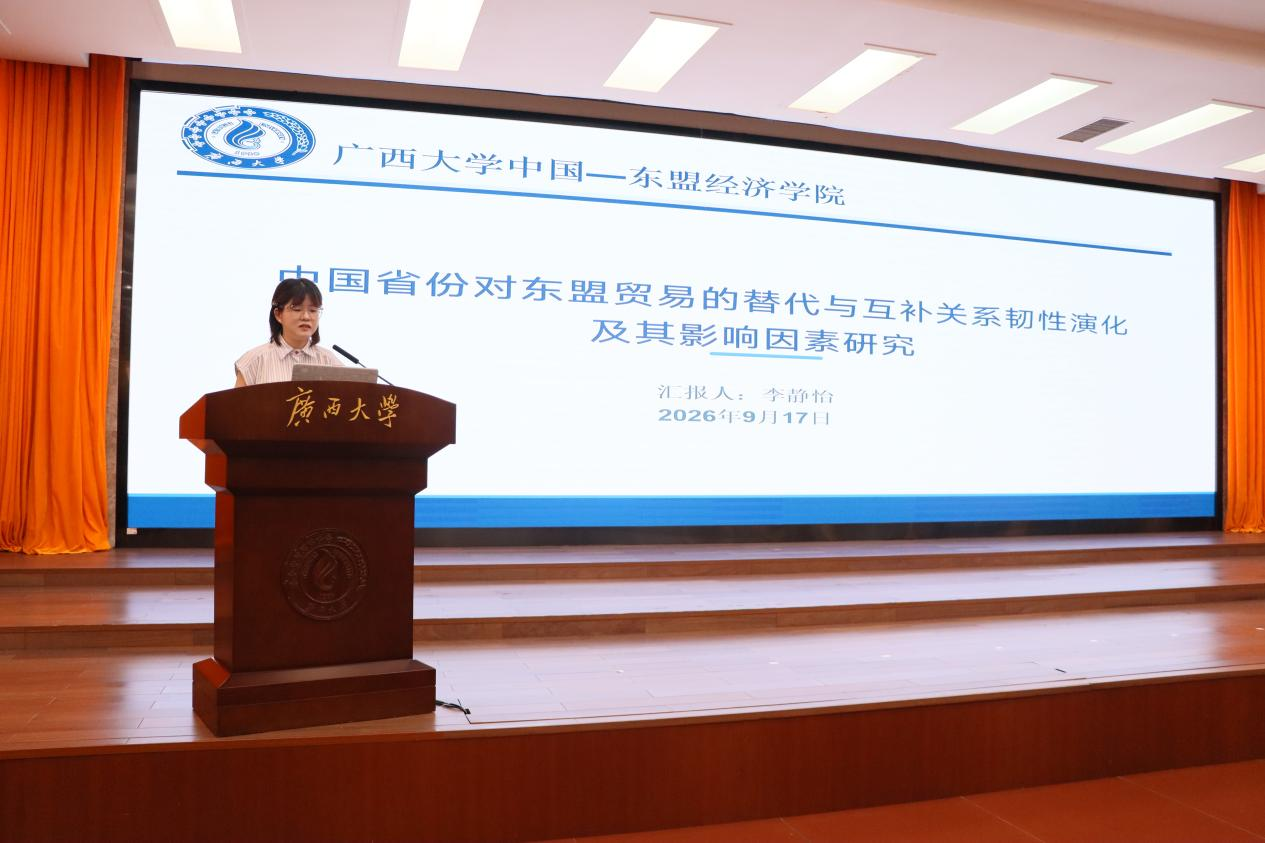
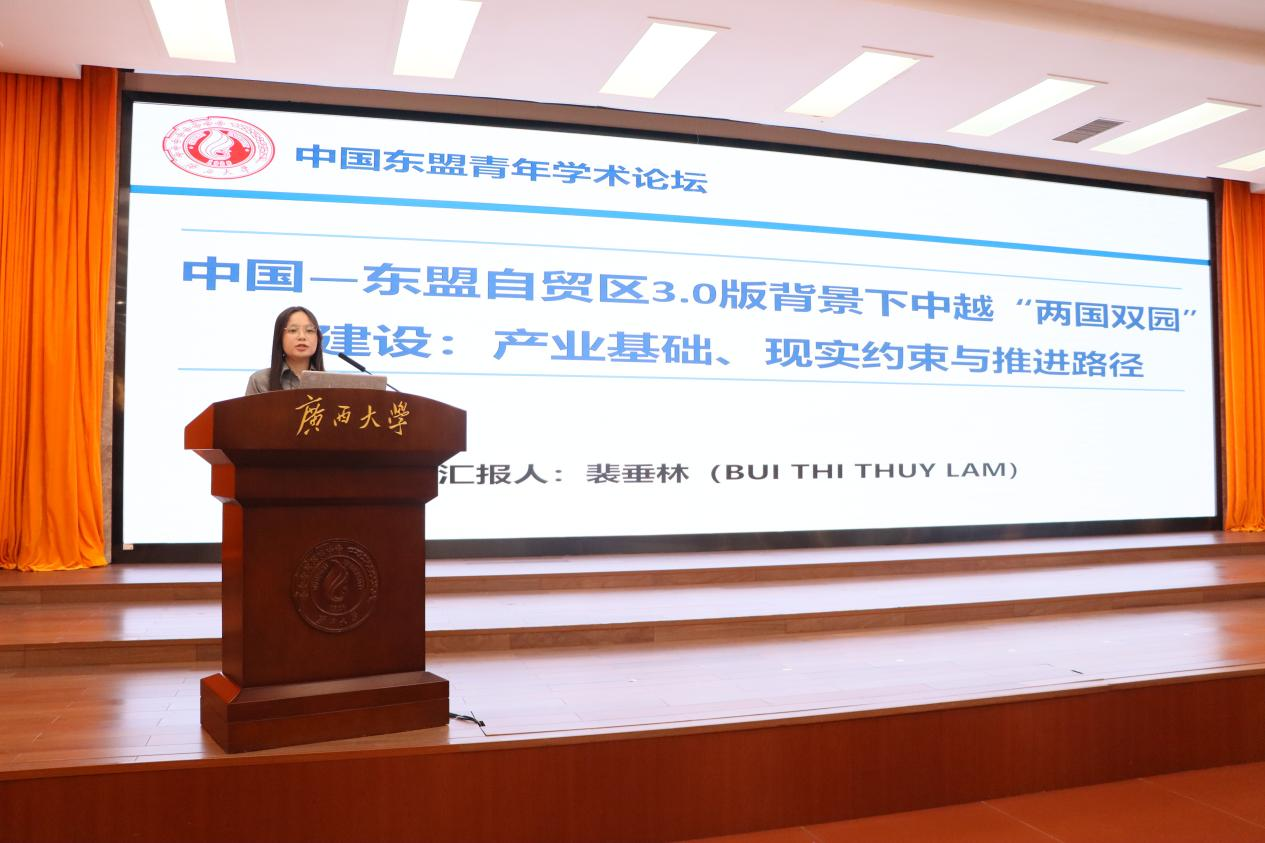
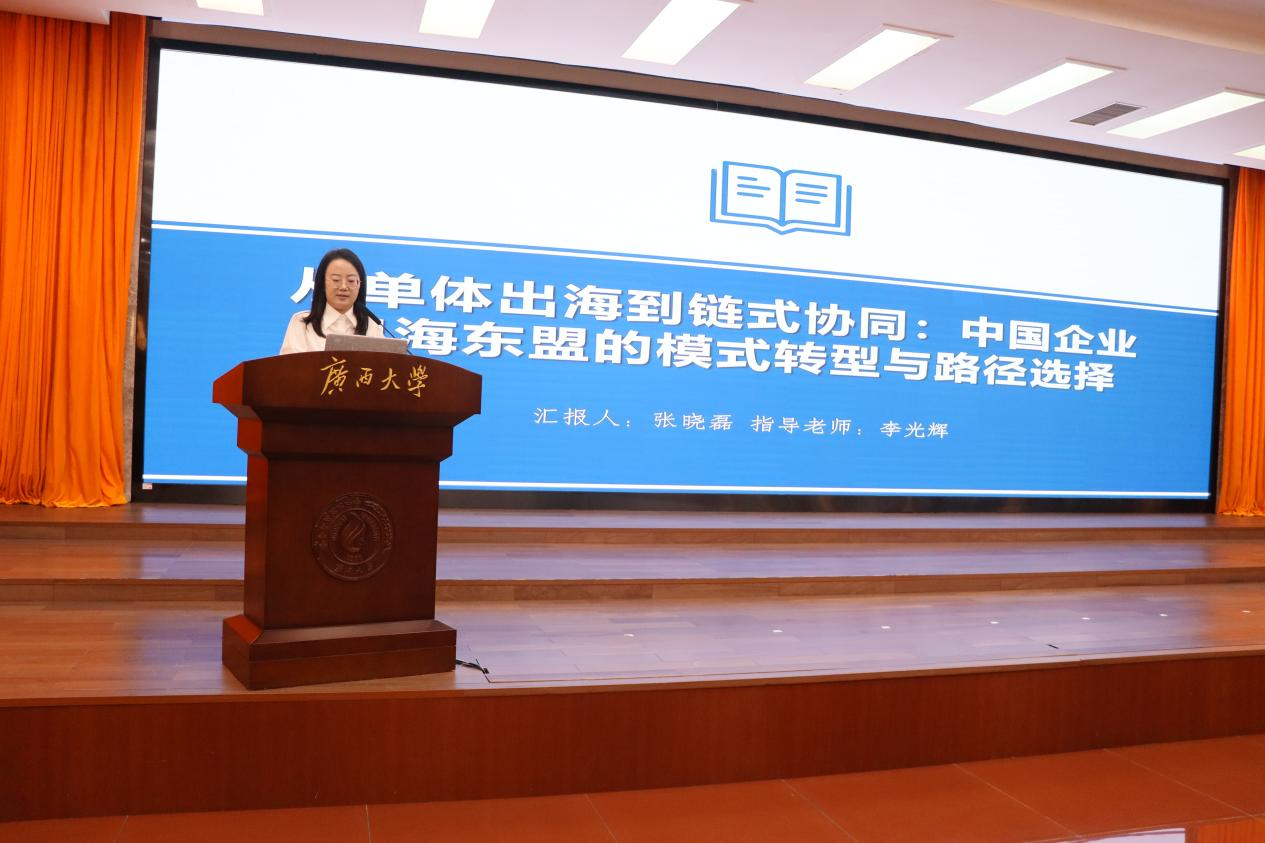
Research presented by the doctoral students further broadened and deepened the discussion. Zhou Shaocheng examined the relationship between the deepening of China-ASEAN trade, labor mobility, and innovation activities; Song Zhengge investigated changes in the value of Chinese technology suppliers in the context of U.S. export controls; Li Jingyi analyzed the dynamic evolution of trade substitution and complementarity between Chinese provinces and ASEAN countries; and Vietnamese doctoral student Bui Thi Thuy Lam focused on the development of China-Vietnam “Two Countries, Twin Parks” under the framework of China-ASEAN Free Trade Area 3.0, exploring new pathways for cross-border industrial chain cooperation. Zhang Xiaolei examined emerging models for Chinese enterprises expanding into ASEAN markets, focusing on the shift from “going global independently” to “chain-based collaboration.”
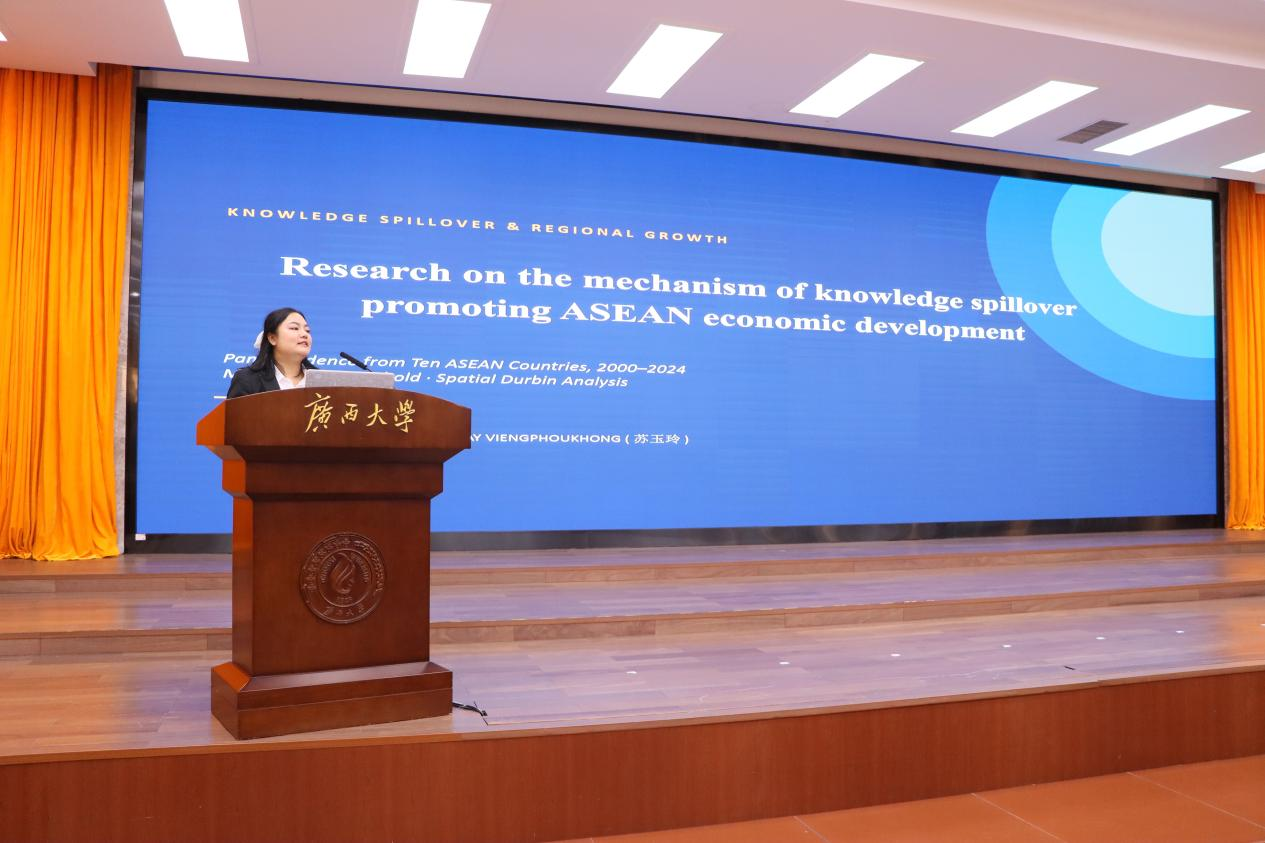
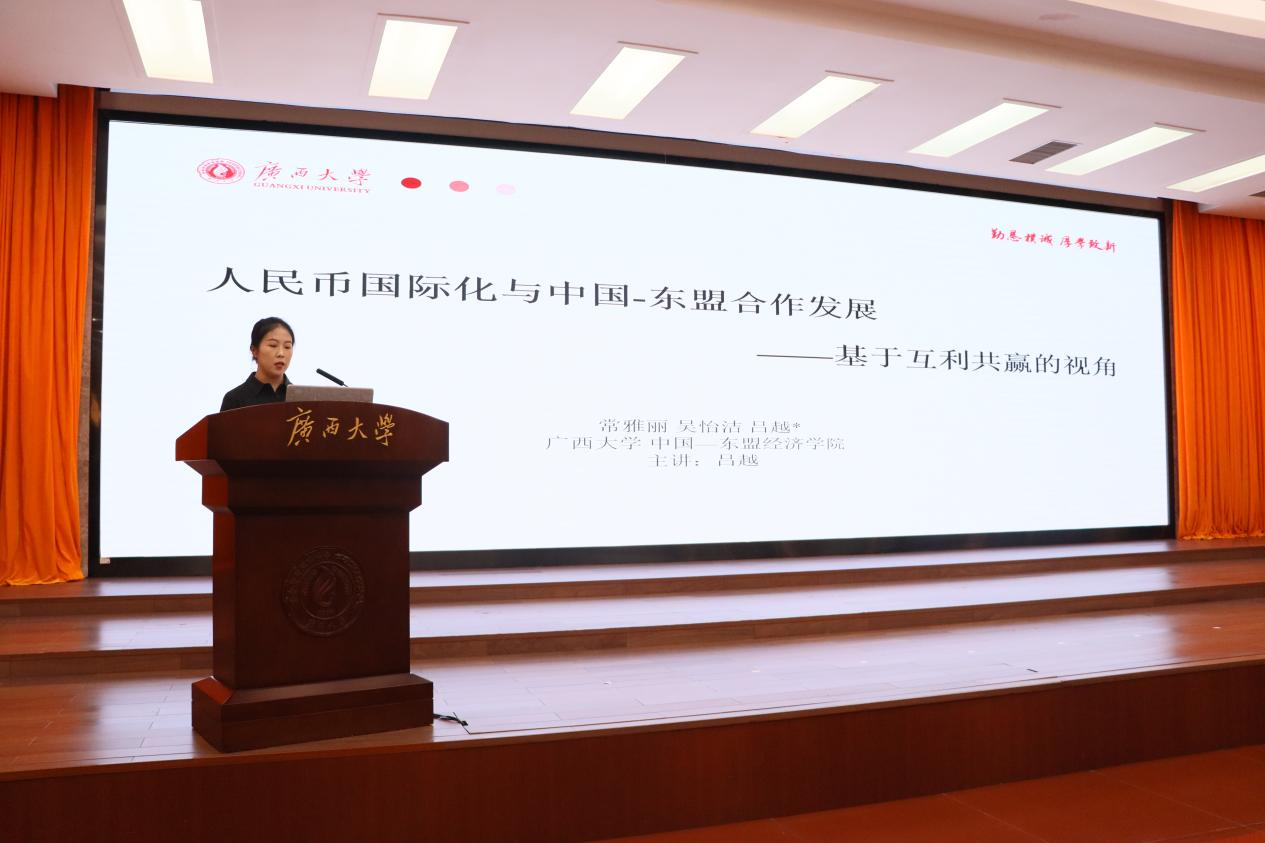
Laotian doctoral student Su Yuling conducted research on the mechanisms through which knowledge spillovers promote ASEAN’s economic development; Lyu Yue examined China-ASEAN cooperation from the perspective of RMB internationalization; and Laotian doctoral student Lili took the China-Laos Railway as the focus of her research, exploring how infrastructure connectivity contributes to the improvement of healthcare services in areas along the railway.
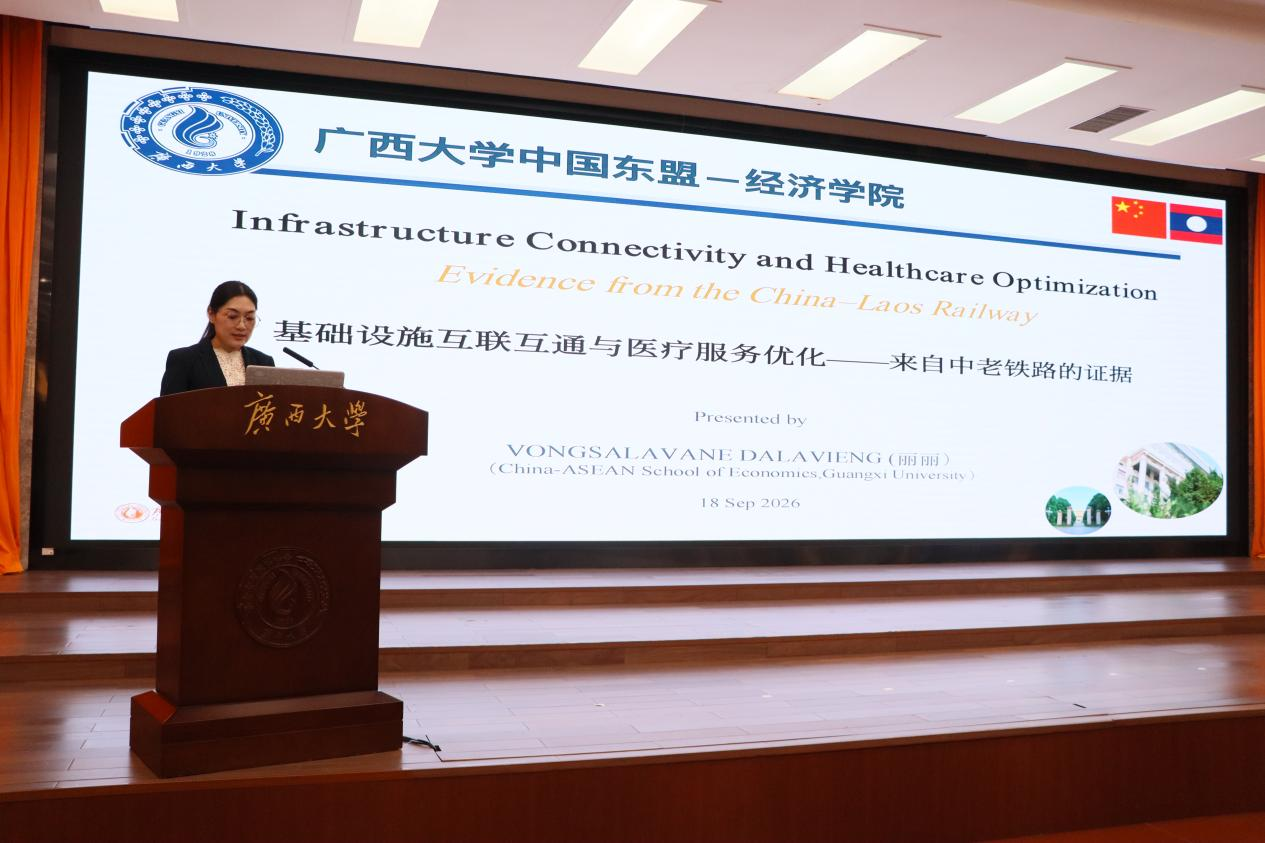
After the youth exchange session, an awards ceremony was held. Liu Mengjuan, Deputy Secretary of the CPC Committee of the School of Economics, Guangxi University, delivered the closing remarks. She commended the insightful presentations by the young scholars from China and abroad, noting that the event was not only a showcase of youth academic achievements, but also an exchange of ideas across national boundaries. She emphasized that young people are active participants in China-ASEAN friendship and cooperation and an important driving force for the future of regional cooperation. She encouraged the young scholars to take this exchange as a new starting point, pay closer attention to the practical needs of China-ASEAN cooperation in their future studies and research, maintain an open perspective and a problem-oriented approach, deepen friendships through exchanges and mutual learning, and contribute the wisdom and insights of youth through academic research and social practice.
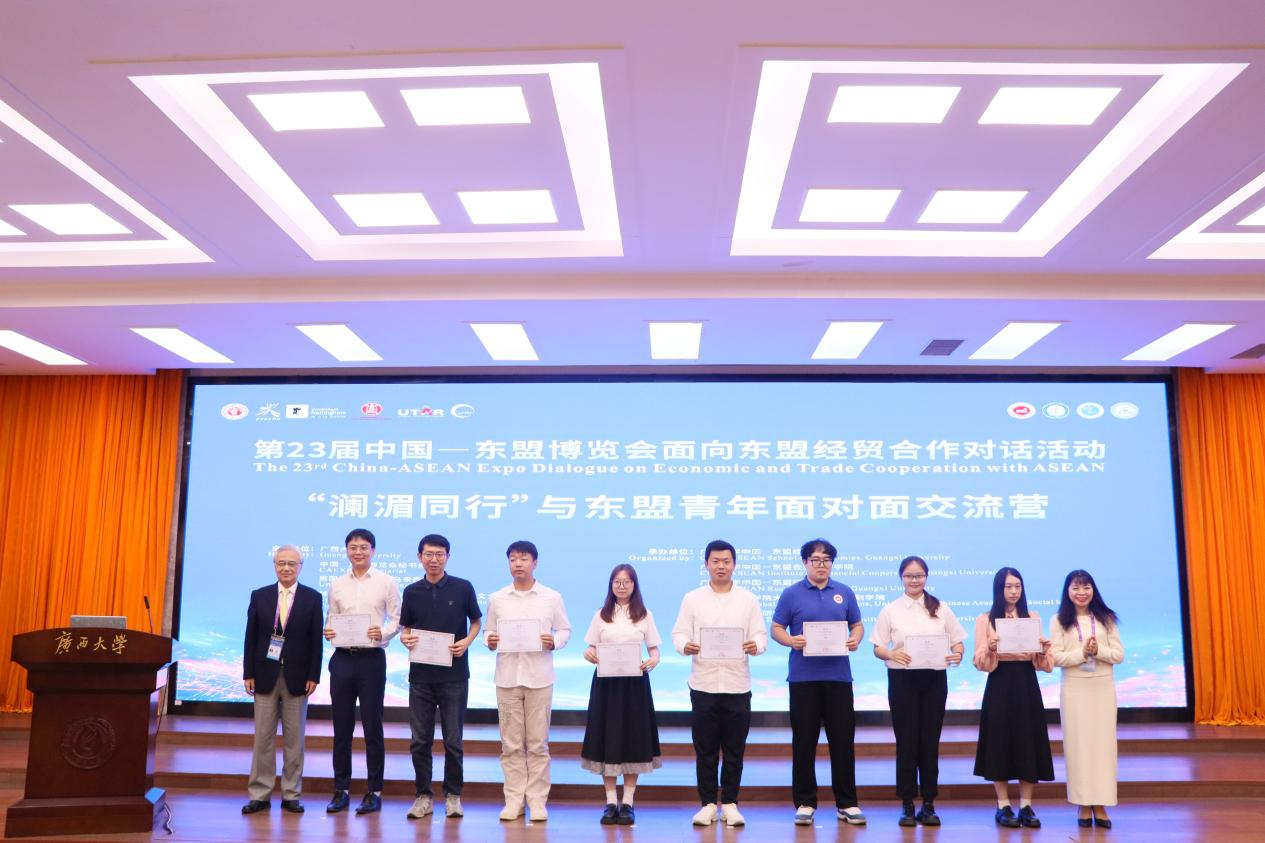
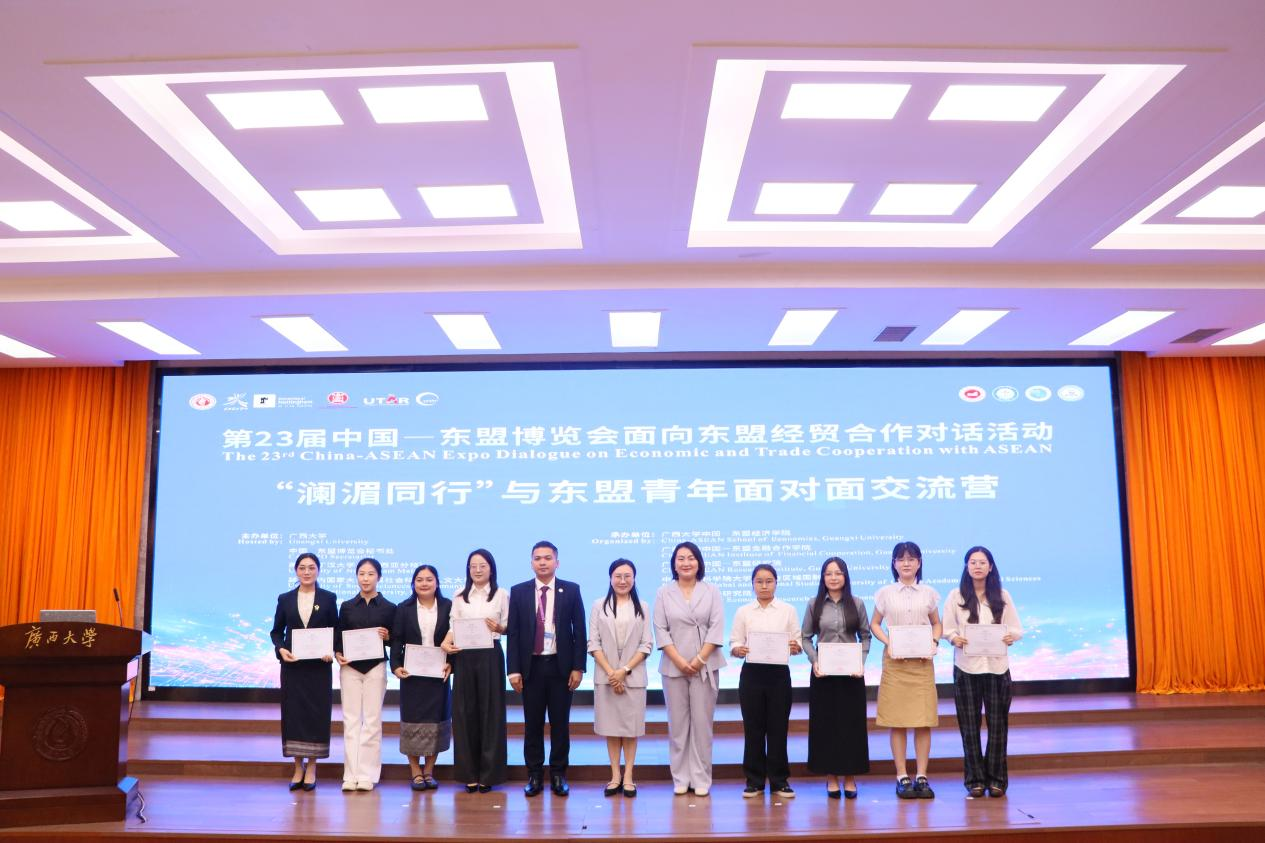
Certificate Presentation Ceremony
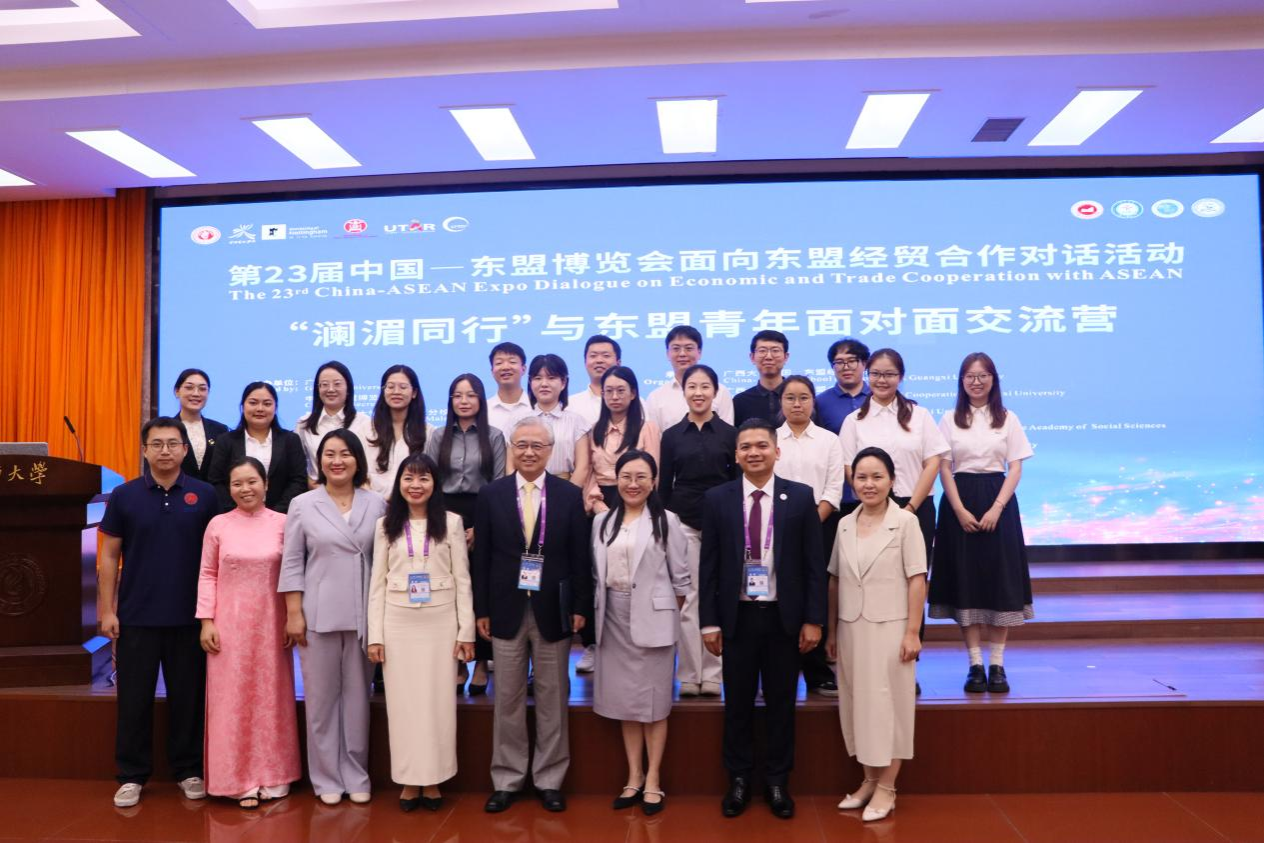
Young people build connections through exchange, while ideas flourish through interaction. The Lancang-Mekong Together: China-ASEAN Youth Academic Exchange Camp, with academic exchange at its core, provided a platform for young people from China and ASEAN countries to get to know one another, learn from one another, and inspire one another. Young participants from different countries shared research findings and exchanged views on issues of common interest, deepening mutual understanding and building consensus through face-to-face dialogue.
Source: Qin Yi, Zheng Liying,
Translated by AI
Proofread by Yu Na, Fan Shi Qiongxiang
Edited by Wei Jiali
Reviewed by Gong Zheng


 ADD:No.100 Daxue Road, Nanning, Guangxi, China
 Tel/Fax:+86-0771-3186687
 Email: gse@gxu.edu.cn
 Wechat