On the afternoon of February 6, 2026, Border Economy Experts Talk was held by the University Think Tank Alliance of Border Economy online. You Zhitin, Chairperson of Nanning Industrial Investment Group and a Senior Economist, delivered a keynote speech. The event featured in-depth discussions with Professor Zhang Haiyuan, academic leader of Guangxi University's School of Economics, alongside young expert Professor Wang Han and Assistant Professor Qin Cheng, Assistant to the Dean. Over 70 participants attended the conference, including Vice President Zhang Xien of Jilin University of Commerce, along with leaders, experts, and faculty representatives from the alliance members.
Chairperson You Zhitin delivered a keynote speech titled "Lessons from Vietnam's Industrial Relocation and Economic Development," providing an in-depth analysis of the country's economic landscape and industrial relocation trends in recent years. She highlighted that Vietnam's economy maintained an average annual growth rate of around 5% from 2020 to 2024, with significant growth in foreign investment and trade. However, the nation also faces challenges such as high external dependence and low industrial value-added.
Yuzhiting's analysis identifies three key drivers behind Vietnam's industrial relocation: the diminishing cost advantages of its existing industries, supply chain adjustments triggered by Sino-US trade tensions, and the country's proactive policy incentives. Based on these insights, she proposes three strategic recommendations for Nanning's industrial development: 1) Prioritize building core industrial chains such as new energy vehicles and electronics; 2) Deepen ASEAN cooperation to expand regional markets; 3) Strengthen infrastructure and talent development to establish a diversified industrial ecosystem. These recommendations provide valuable references and actionable strategies for industrial upgrading in border regions.
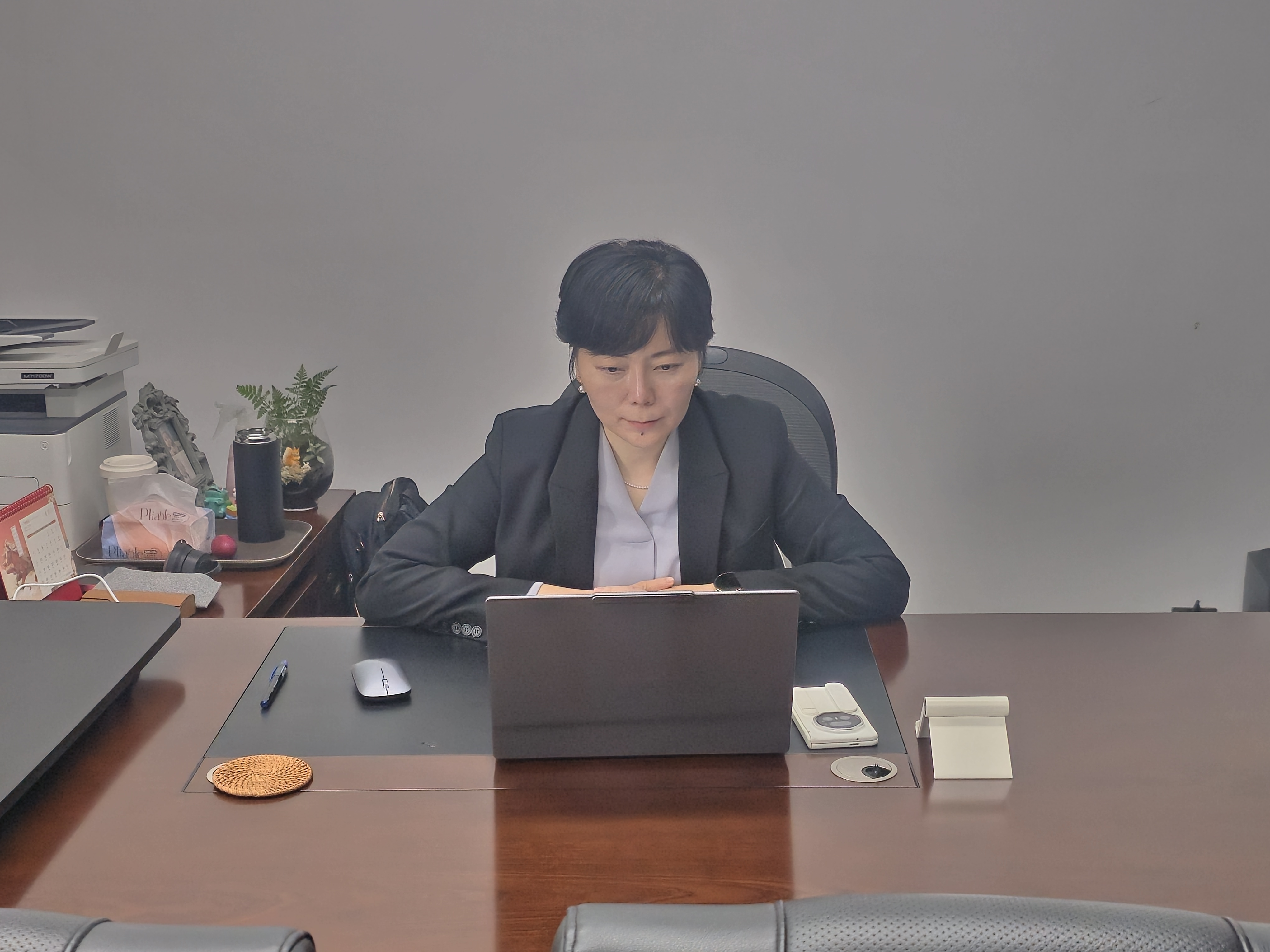
Chairperson Yu Zhitin Delivered A Speech
Professor Zhang Haiyuan highly agreed with the views of Chairperson You Zhiteng. He pointed out that Vietnam's current development path is highly similar to the early stages of China's reform and opening-up, both of which achieved rapid trade growth by seizing the window of international industrial transfer, leveraging comparative advantages in factors such as labor, and attracting foreign investment through preferential policies. Professor Zhang Haiyuan analyzed that Vietnam has fully utilized the opportunities brought by changes in Sino-US economic and trade relations in recent years, actively undertaking relevant industrial transfers, and its industrial role is gradually extending from a single production link to a broader full industrial chain. He emphasized that with the deepening of the construction of a China-Vietnam community with a shared future, bilateral relations will shift more from competition to cooperation, jointly addressing the challenges brought by the restructuring of the global industrial chain, and ultimately realizing a development prospect of mutual benefit and win-win outcomes.
During the discussion, Professor Wang Han highlighted that the systematic and profound analysis of Vietnam's economy not only reveals the development logic of its export-oriented economy but also clearly demonstrates the dynamic selection process of industrial relocation. She particularly emphasized that the current phenomena in Vietnam, such as rising land costs and prolonged land acquisition cycles, essentially serve as critical signals indicating that land resource constraints have become apparent after the country's export-oriented economy reached a certain stage. Based on recent research conducted along the China-Vietnam border, Professor Wang Han discovered that Vietnam is implementing a "border relocation" policy, which guides population and industries to shift to border areas to alleviate development pressures in core regions. She believes that this industrial spillover effect may profoundly impact population distribution, land use structure, and the relationship between industry and agriculture in border areas, warranting continued attention. Finally, Professor Wang Han and Chairperson You Zhiteng further discussed whether enterprises and local governments have observed a trend of industrial repositioning to border areas, as well as the specific impacts of this trend on land utilization and regional development. She expressed hope for deeper exchanges and collaborations in the future on interdisciplinary issues such as industry, land, and regional development.
Assistant Professor Qin Cheng pointed out in the exchange that Vietnam's window of opportunity to rely on low-cost factors for industrial transfer is gradually narrowing. He believes that under the background of the post-globalization era, the sustainability of Vietnam's development model driven by traditional comparative advantages is facing challenges, and it is necessary to consider how to timely promote the transformation and upgrading of the development model, just like China. This view further extends to a deeper issue: whether it is Vietnam or China, when traditional advantages weaken, they should actively guide industrial policies to shift the economy from factor-driven to dual-wheel drive of innovation and institutions, thereby better addressing the new challenges brought by the restructuring of the global industrial chain.
Professor Zhang Xien, Vice President of Jilin University of Commerce, pointed out in her speech that Vietnam's current development path is highly similar to the stage China once experienced. Its dependence on foreign trade has reached approximately 1.8 times its GDP, far exceeding China's peak of 71% in 2007-2008, demonstrating a high reliance on external markets. She analyzed that Vietnam's model of attracting foreign investment through preferential policies is similar to China's early stages, but long-term development still faces constraints such as rising land costs and non-mandatory land expropriation systems, requiring attention to coordinating relationships at various levels of domestic government and even individual households. In terms of cooperation directions, Professor Zhang Xien noted that the limited use of the RMB in Vietnam is both a challenge and a potential breakthrough. Progress in areas such as electronic settlements could potentially drive a leap in bilateral trade volume. Additionally, regarding the current trend of industries relocating to Vietnam, she suggested that academia should strengthen relevant research and provide rational explanations, clarifying that this is a natural law in the process of industrial upgrading—just as the "Four Asian Tigers" experienced, China is advancing to a higher stage of development.
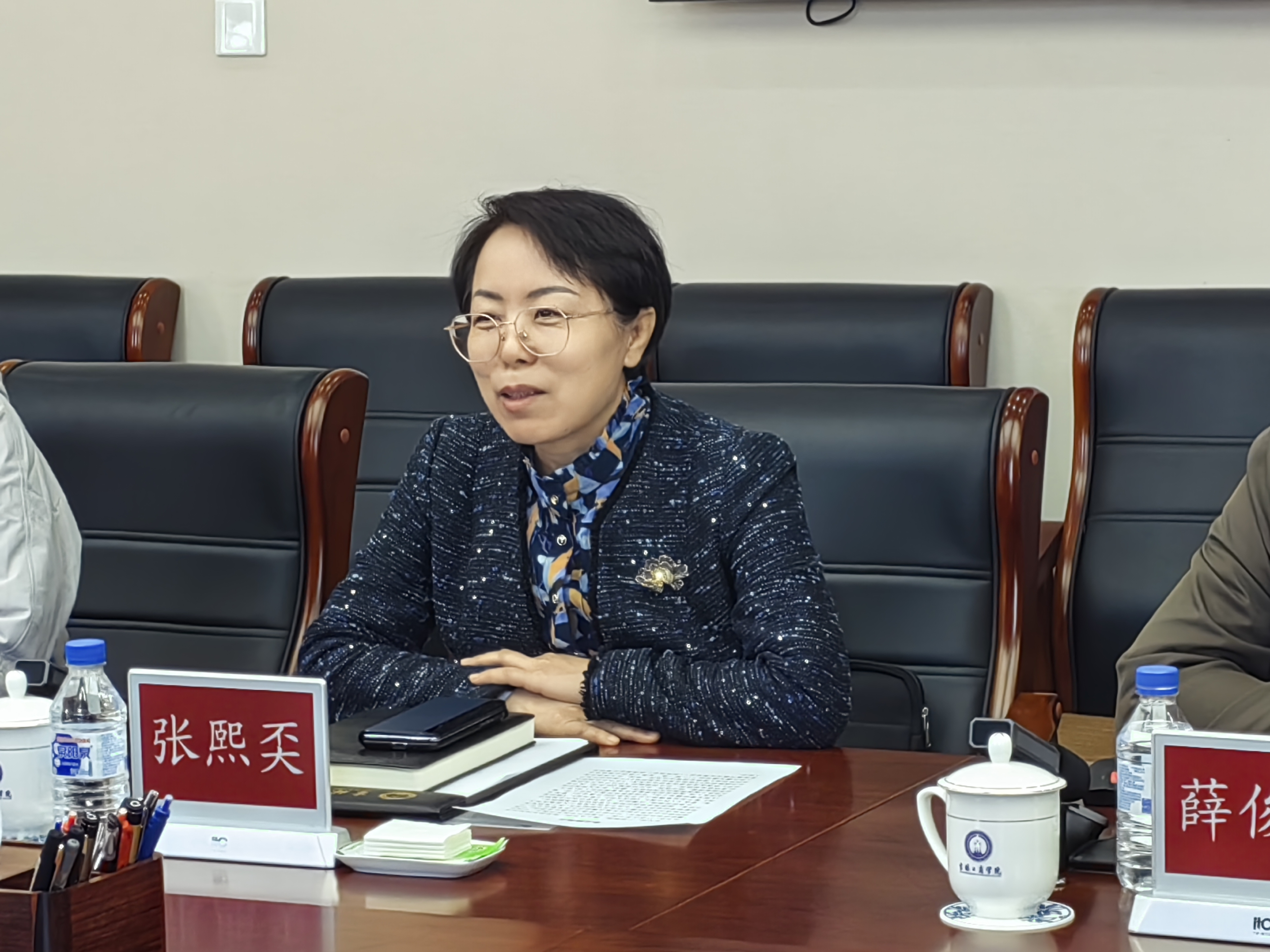
Vice President Zhang Xien Delivered A Speech
The meeting was chaired by Li Xiangrong, Secretary-General of the Think Tank Alliance. As the exchange session progressed, the first "Border Economic Experts Forum" concluded successfully in a lively and pragmatic atmosphere.
This event not only established a high-level dialogue platform for stakeholders, but also marked a significant milestone for the Think Tank Alliance in consolidating academic expertise and advancing regional development. In the future, the alliance will continue to pool the intellectual resources of domestic and international scholars, industry leaders, and policymakers. By conducting sustained and in-depth discussions on critical issues in border economic development, it will actively bridge academic research with policy implementation, thereby injecting more constructive wisdom and innovative momentum into promoting high-quality development in border regions.
Written by Gong Runze, Teng Yusheng
Proof Read by Yu Na, Chen Yanyang
Edited by Gan Ziying
Reviewed by Gong Zheng


 ADD:No.100 Daxue Road, Nanning, Guangxi, China
 Tel/Fax:+86-0771-3186687
 Email: gse@gxu.edu.cn
 Wechat