From 11 to 12 May, Party Secretary Jiang Wei led a delegation to Fudan University, Shanghai University of Finance and Economics, and Tongji University for exchange visits and institutional discussions. The delegation held discussions on talent recruitment and development, postgraduate education, disciplinary construction, and institutional governance, with the aim of strengthening collaboration and learning from the practices of leading institutions. Vice Dean Tan Chunzhi, Associate Professor Liu Qianwen, Assistant Professor Zhang Chaoshuai, and Ji Ping joined the delegation.
Benchmarking Against Leading Institutions to Broaden New Approaches to Talent Development
During the visit to the School of Economics at Fudan University, the delegation held in-depth discussions with Vice Deans Chen Zhao and Xu Xian, along with representatives from relevant administrative departments. The exchanges focused on institutional design, operational mechanisms, and management models related to talent development and postgraduate education. Representatives from Fudan University shared their experience in identifying high-potential scholars, nurturing early-career faculty, organising research activities, and enhancing postgraduate education. They emphasised that talent development should not rely solely on conventional indicators or titles, but should instead place greater importance on academic potential, career stage, and long-term scholarly contributions.

Delegation meeting with the School of Economics at Fudan University
Focusing on Finance to Explore New Pathways for Distinctive Development
At the School of Finance of Shanghai University of Finance and Economics, the delegation met with Party Secretary Zhu Xiaoneng, together with representatives from the Department of Insurance and Actuarial Science, the Department of Banking, and academic affairs offices. Discussions focused on the recruitment of high-level talent, the cultivation of young scholars, faculty mentorship systems, and innovations in postgraduate education. The School of Finance introduced its dual-track talent recruitment mechanism combining tenure-track and domestic-track pathways, as well as its diversified evaluation system, performance-oriented reforms, specialised professional master of Finance programme design, and curriculum development initiatives aimed at strengthening students’ artificial intelligence literacy.
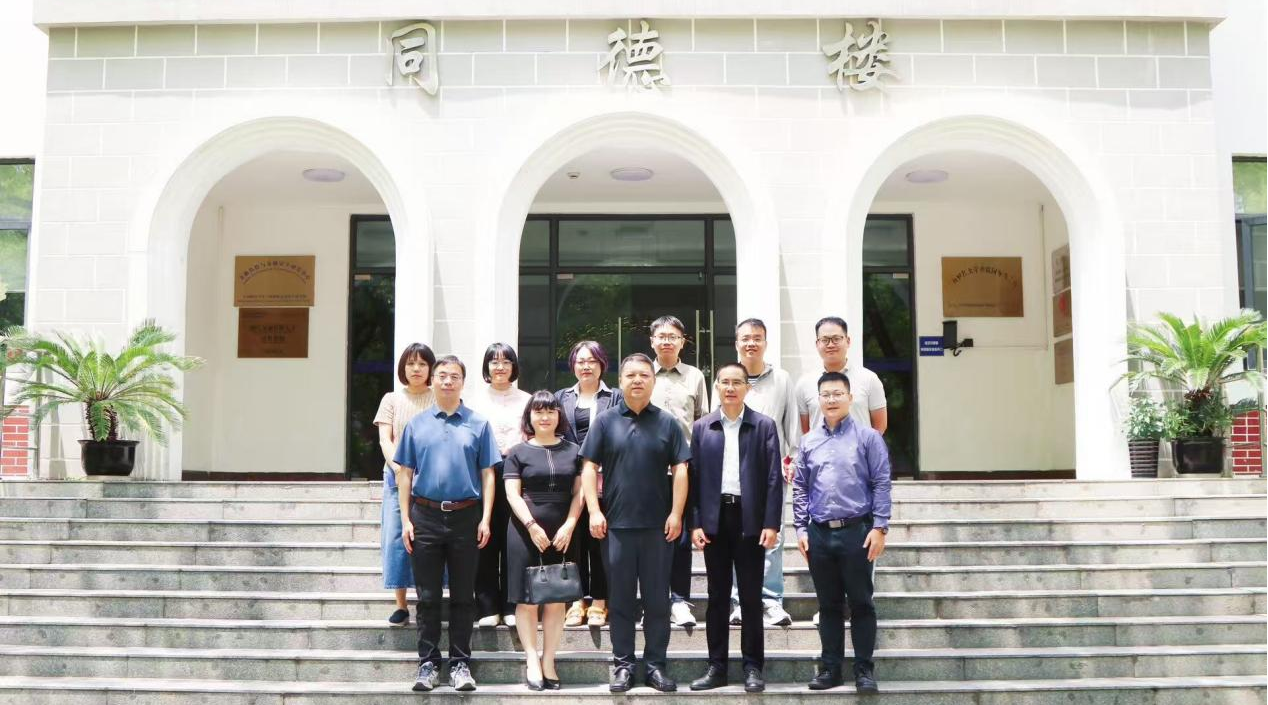
Group Photo of the Delegation and Representatives from the School of Finance at Shanghai University of Finance and Economics
Deepening Reform to Foster New Momentum for Institutional Governance
During the visit to the School of Economics and Management at Tongji University, the delegation held discussions with Vice Deans Cheng Mingwang (a distinguished alumnus of Guangxi University’ s School of Economics) and Li Wenchao, alongside representatives from the Department of Finance, postgraduate education centres, and human resources offices. The discussions focused on modernising institutional governance and enhancing quality-oriented development. Representatives from Tongji University shared their reform experiences in areas including performance-based incentives, international accreditation, and professional master’ s education, highlighting a strong emphasis on advancing development through reform and institutional innovation.
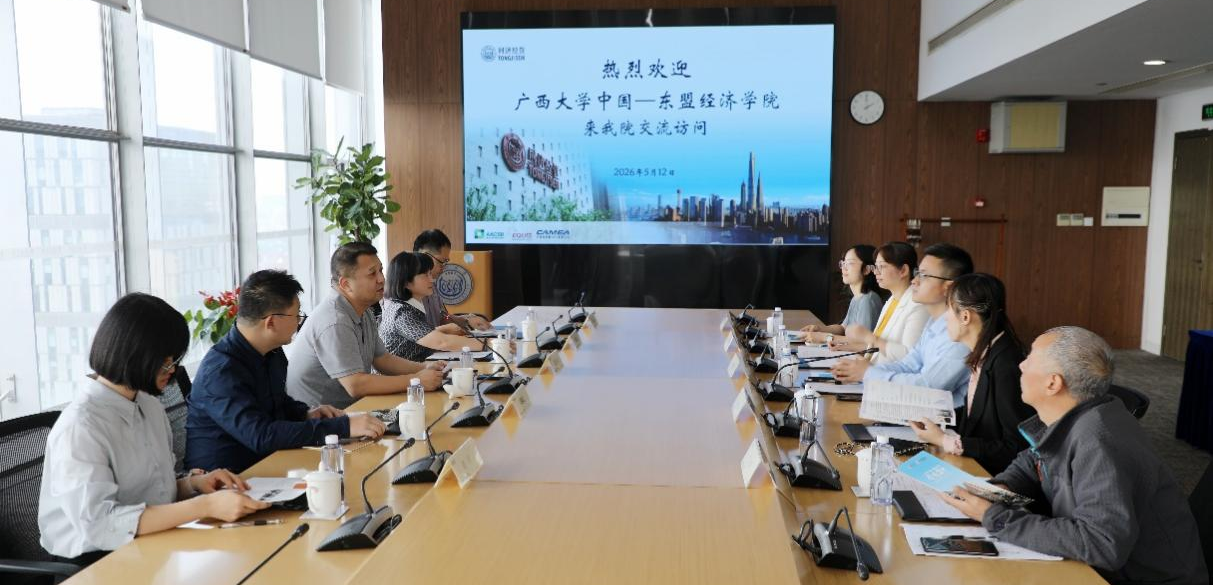
Delegation meeting with the School of Economics and Management at Tongji University
The delegation’ s visits to leading universities in Shanghai represent an important initiative by the School to benchmark against top-tier institutions in economics and management and to advance high-quality development. Moving forward, the School will continue to consolidate insights gained from the visits, further improve its talent recruitment and development mechanisms, optimise postgraduate training systems, and strengthen distinctive research areas including China - ASEAN studies, borderland economy, open economy, and financial development. These efforts aim to contribute to China’ s strategy of opening up towards the South, the high-quality development of border regions, and the building of a China - ASEAN community with a shared future.
Source: Ji Ping, Zhang Chaoshuai
Translated by AI
Proofread by Yu Na, Fan Shi Qiongxiang
Edited by Gan Ziying
Reviewed by Gong Zheng


 ADD:No.100 Daxue Road, Nanning, Guangxi, China
 Tel/Fax:+86-0771-3186687
 Email: gse@gxu.edu.cn
 Wechat